
Our solar innovations
Heterojunction panels
When this technology first came out, some energy players were cautious: higher prices, a new system… it attracted as much scepticism as it did enthusiasm.
At InnoVent, we were immediately convinced of the merits of this technology. That’s why we very quickly decided to use this technique across all our future wind farms.
But what is heterojunction?
This technology involves using two different types of silicon in the panel. In this type of panel, crystalline silicon, which captures light, is superimposed on a thin layer of amorphous silicon. This mixture of materials, known as heterojunction, allows for better management of electrons.
This technique has many advantages, including:
- High efficiency, averaging around 25% compared to 18-20% for traditional panels.
- Better performance in low light conditions (darkness, cloudy weather, etc.).
- Longer lifespan.
- Better resistance to high temperatures, allowing for better production in these conditions.
- Bifaciality: the panels can capture light from both sides, not just one.
The PEG system
PEG is a system that the company has chosen to implement in Chad, at its solar power plant in Abéché. PEG is an innovative structure that allows solar panels to be installed very close to the ground, in tight, compact rows.
This structure has many advantages, including:
- This type of park is assembled using thin rods or lightweight anchors, making installation quick and economical.
- It requires less steel than a conventional structure.
- The energy density is higher due to the greater number of panels per square metre;
- Due to its very low structure (approximately 80 cm), this type of construction is less visible in the landscape;
- Finally, it requires no cranes or heavy machinery as it can be easily installed by hand.
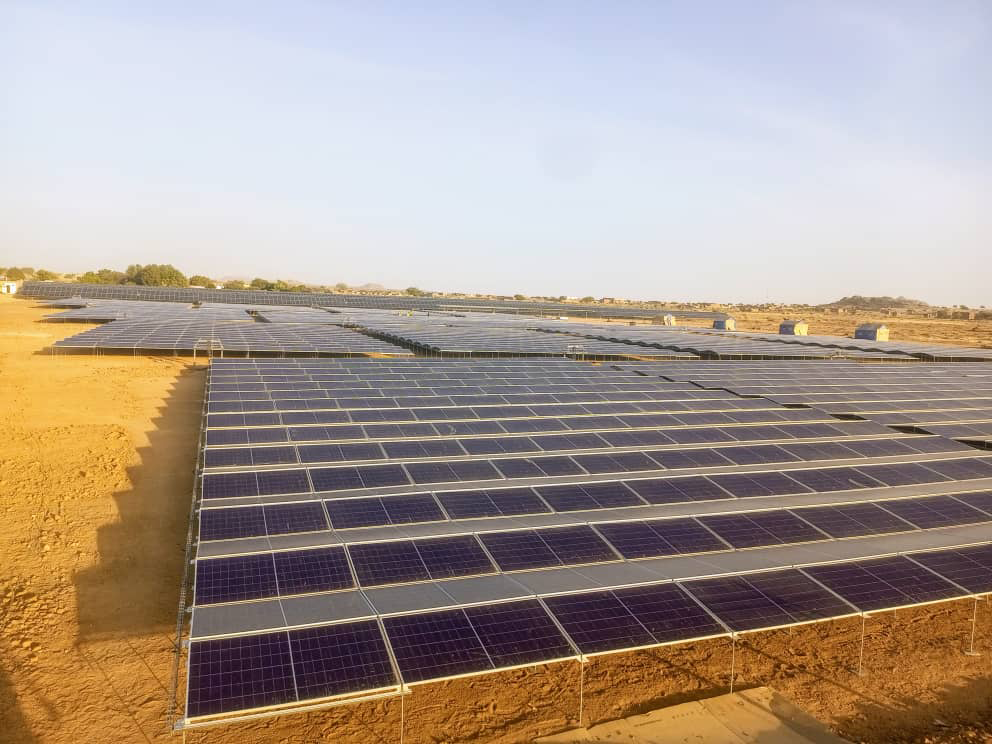
In terms of disadvantages, this structure has three main ones:
- Cleaning and maintenance are more difficult because access under the panels is quite restricted;
- There is a slight loss of efficiency because the panels heat up a little more due to poor ventilation;
- This type of structure is more suitable for large power stations and less so for small projects.
Batteries
The BESS battery system is now becoming more widespread, but InnoVent has been investing in this system for over five years.
In fact, we began installing our first batteries at our wind farm in Essey-les-Ponts. That same year, we inaugurated our first solar farm in Foumbouni in the Comoros, which was also equipped with batteries.
Today, all of the solar power plants we build are equipped with them.
This system is highly beneficial, both in Africa and in Europe. In Europe, the share of renewable energies has increased considerably in recent years, regularly leading to network overloads and potential outages. By investing in battery storage, we can avoid these overloads and thus stabilise the network.
In Africa, batteries also play a crucial role. Due to the amount of sunshine, energy production is very high during the day but almost non-existent at night. Conversely, energy demand is high in the evening and lower during the day. This is why, thanks to these batteries, we can feed energy into the grid 24 hours a day. Without them, the people of Chad or the Comoros, for example, would have no electricity when they need it most.